AutoDesigner
An AI tool that turns an uploaded architecture image into a data flow diagram and a pre-filled threat analysis report.
- Automotive cybersecurity
- AI workflow
- MVP
- 0→1 Product
- B2B SaaS
- UX Lead
- Product
- AI-powered threat analysis for automotive cybersecurity
- Industry
- Automotive cybersecurity
- My role
- UX Lead for a newly built cybersecurity product
I was UX Lead for a newly built cybersecurity product, responsible for end-to-end design from concept to launch.
We kicked off with a discovery day where we conducted user observations (contextual inquiry) and in-depth interview sessions with current users — cybersecurity engineers — to deeply understand their workflows and pain points.
I created early prototypes for each section and tested them with real users, presenting design alternatives for each key screen and flow. Their feedback decided the direction and validated key design decisions.
- 1Upload or draw
- 2Data flow diagram
- 3TARA report
- 4Export
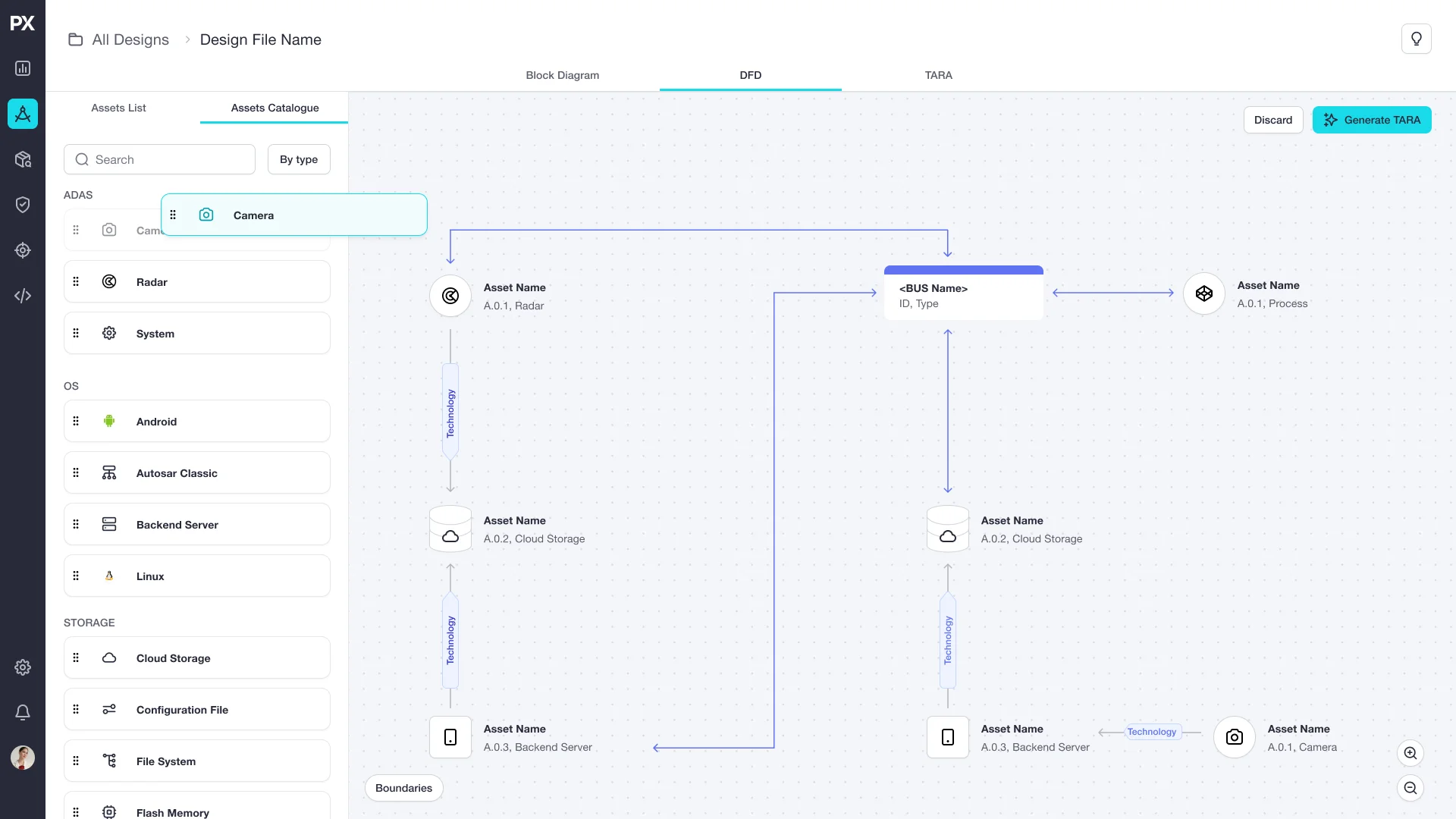
Data flow diagram
Assets and their connections, on a canvas
The diagram is built on a canvas and stays editable at every step.
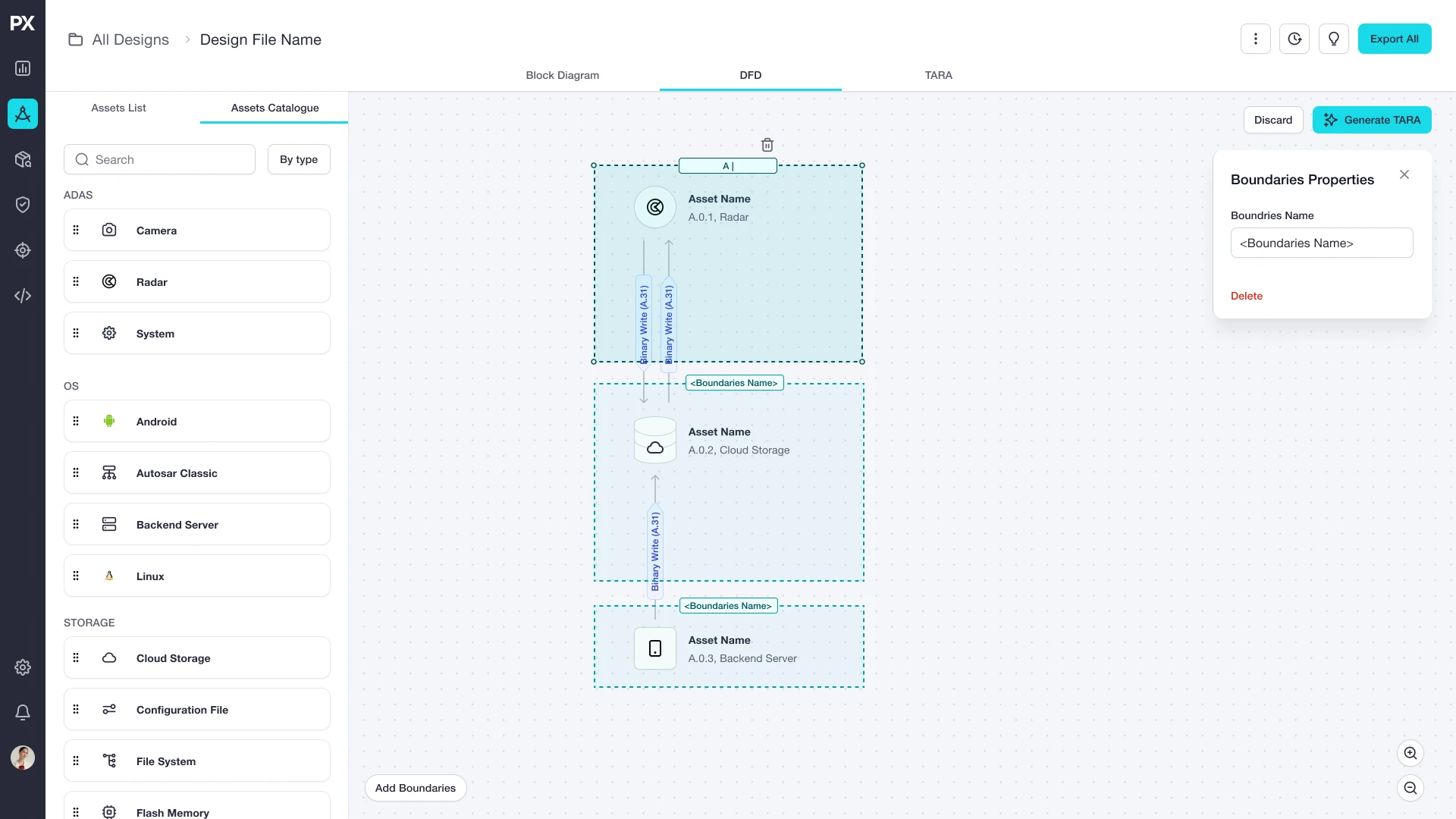
Boundaries
Mark an area of the architecture
A boundary outlines an area of the diagram, to include it in the TARA report.
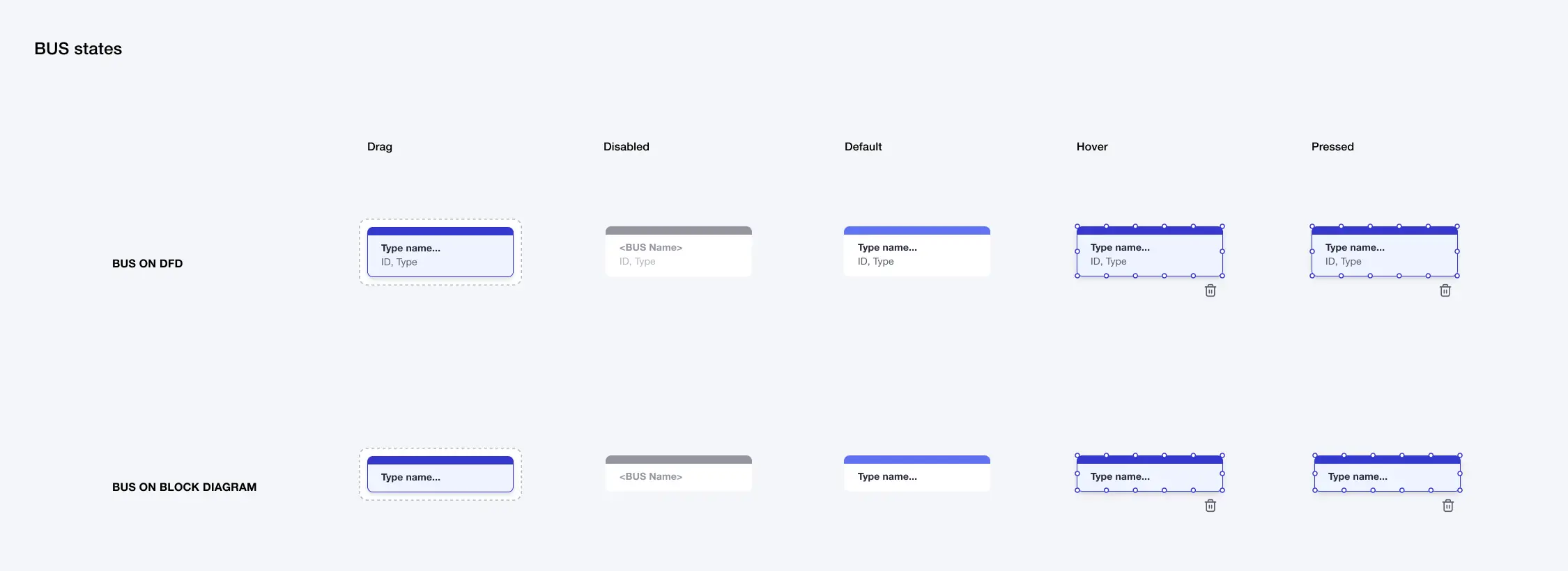
Data flow diagram
States of a BUS asset
Drag, disabled, default, hover and pressed, on the DFD and on the block diagram.
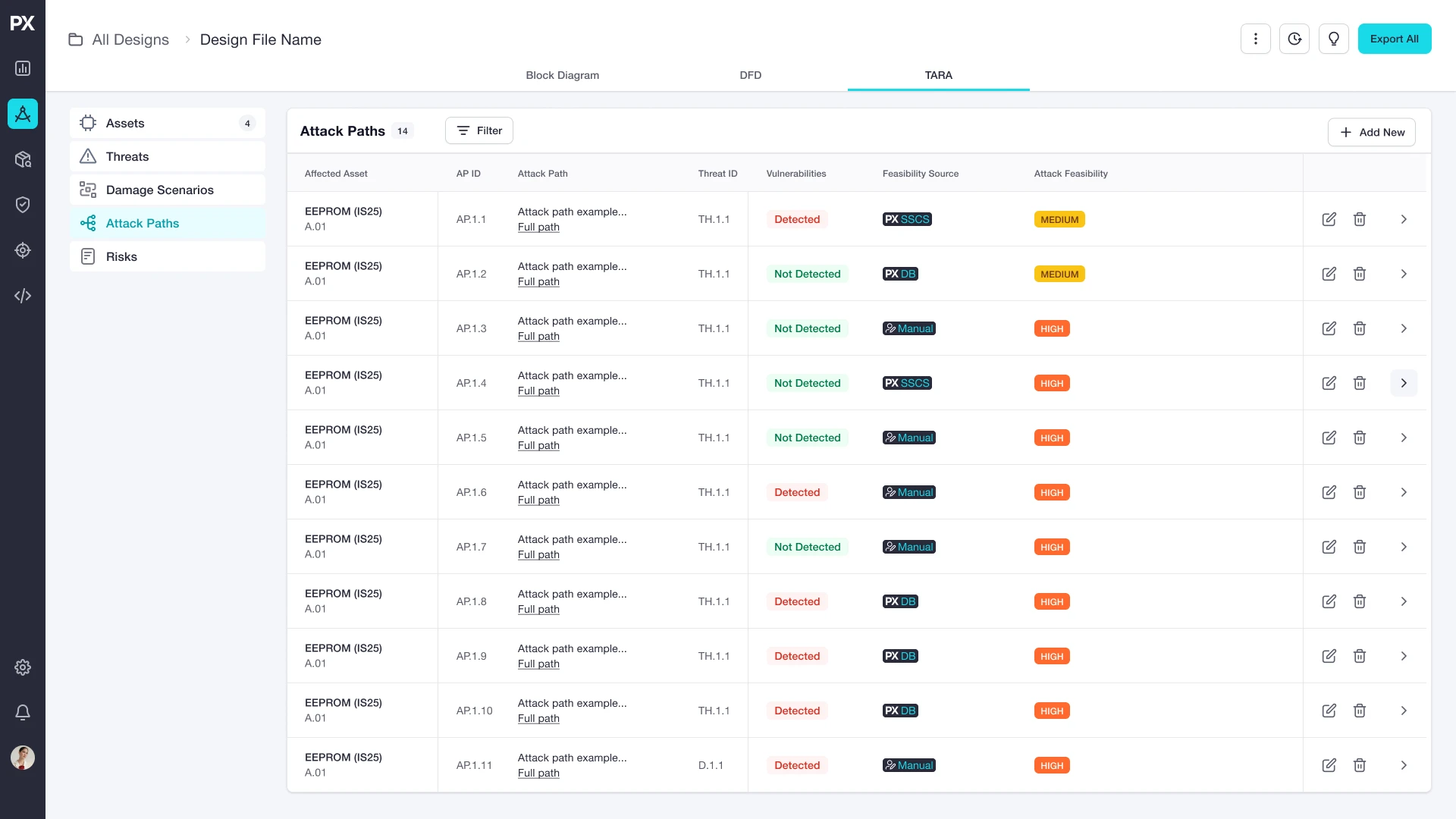
TARA
A pre-filled threat analysis
Attack paths are listed in a table you can review and edit.
TARA
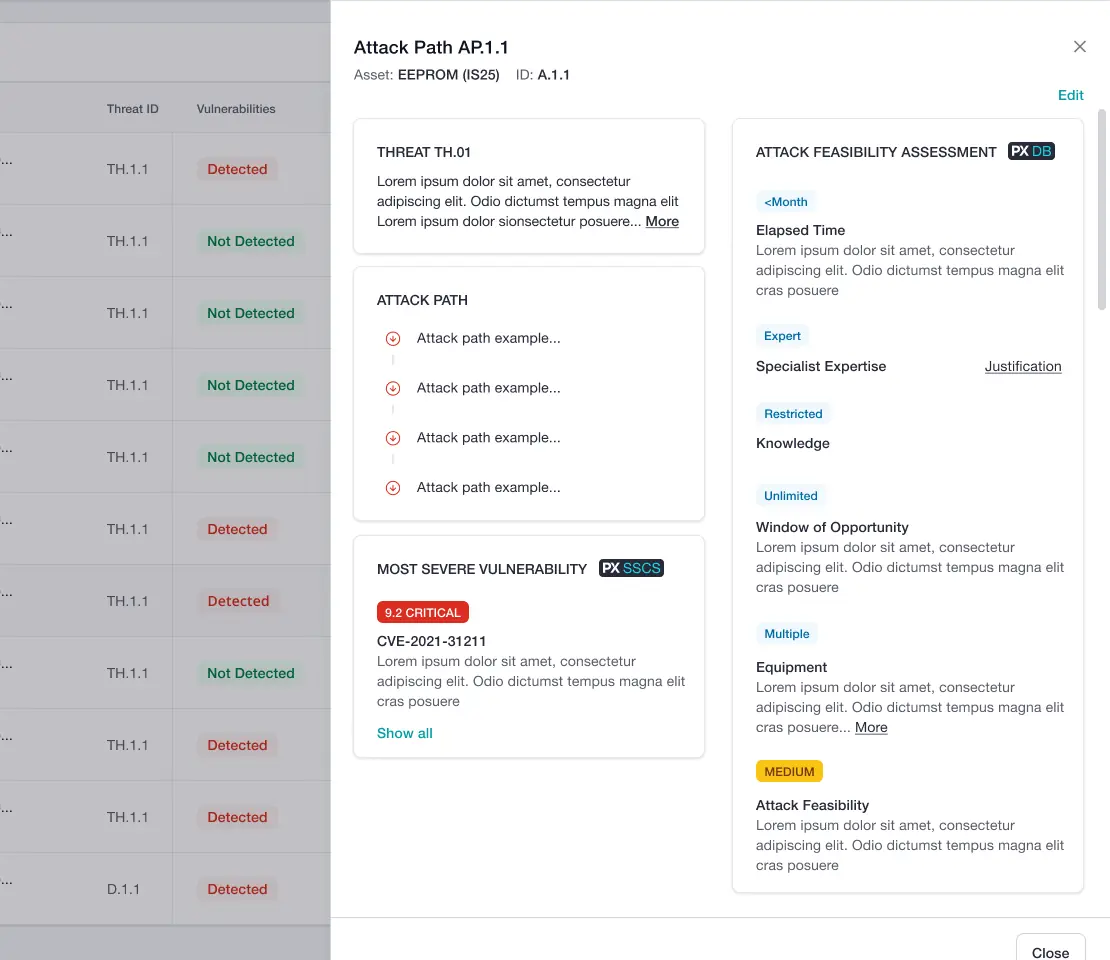
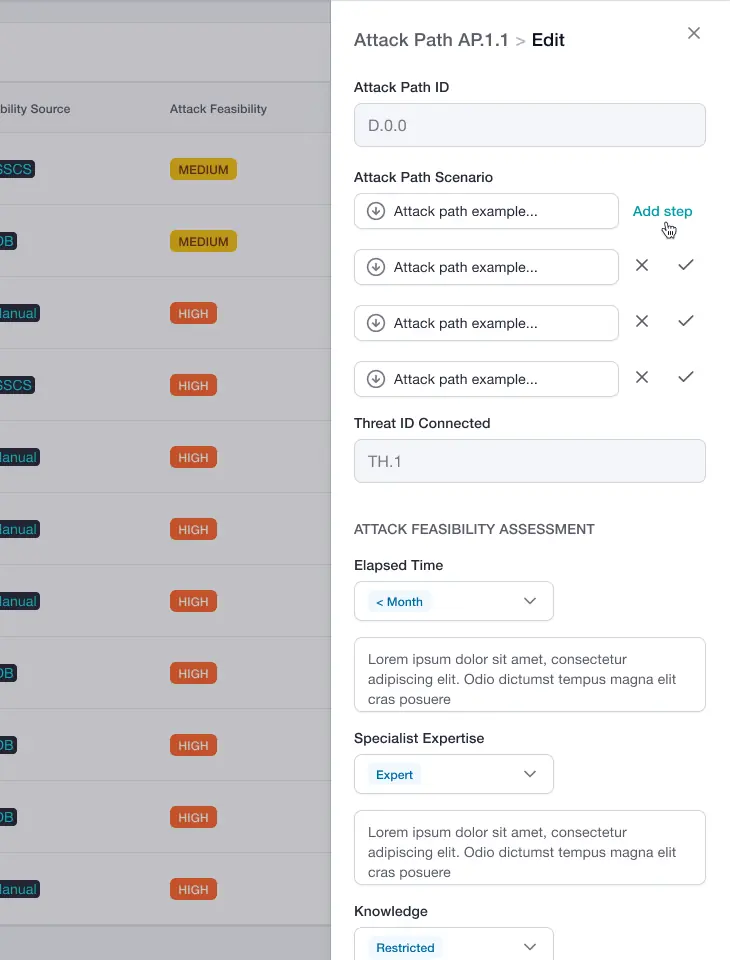
Attack path details
A details panel for each attack path, and an editing mode.
TARA report
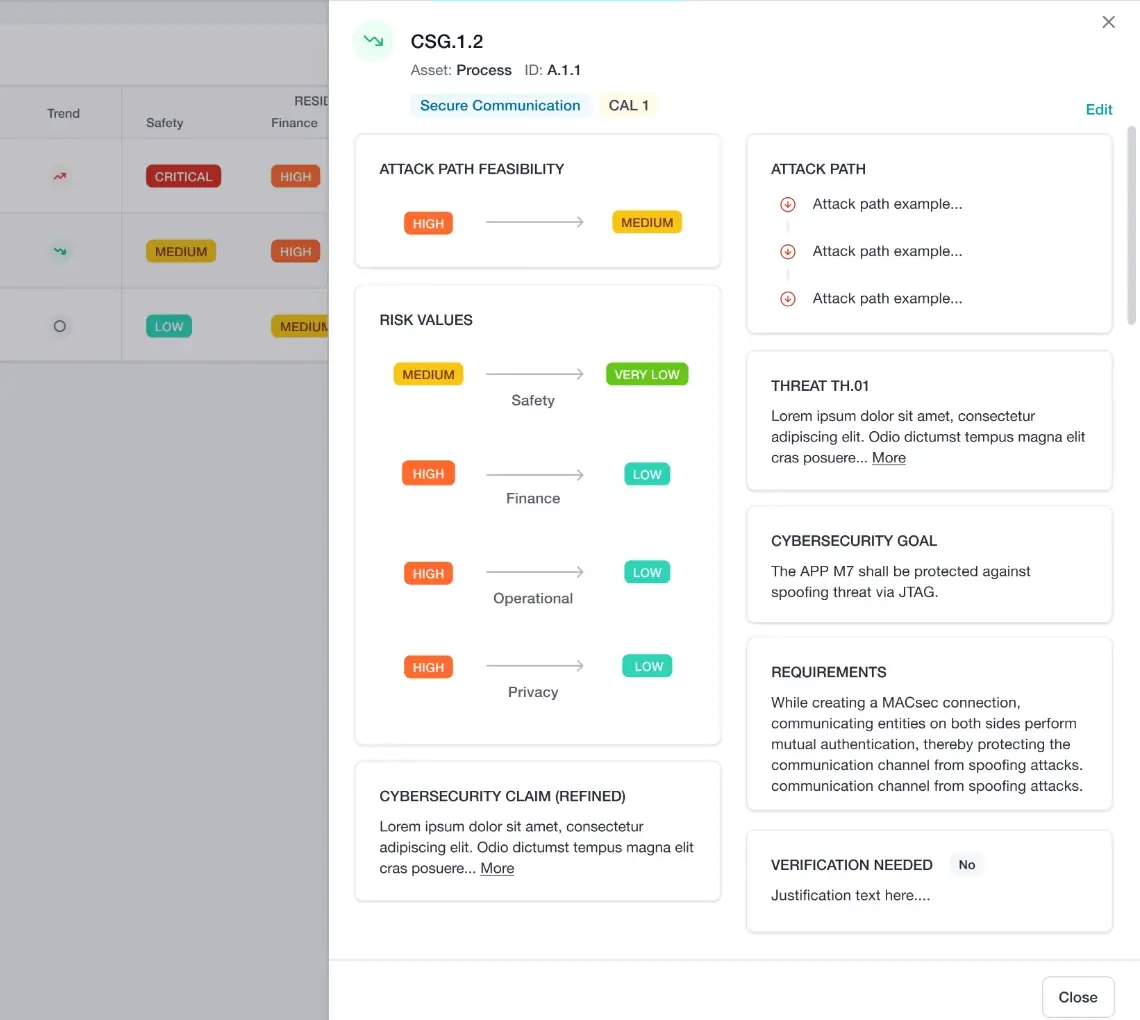
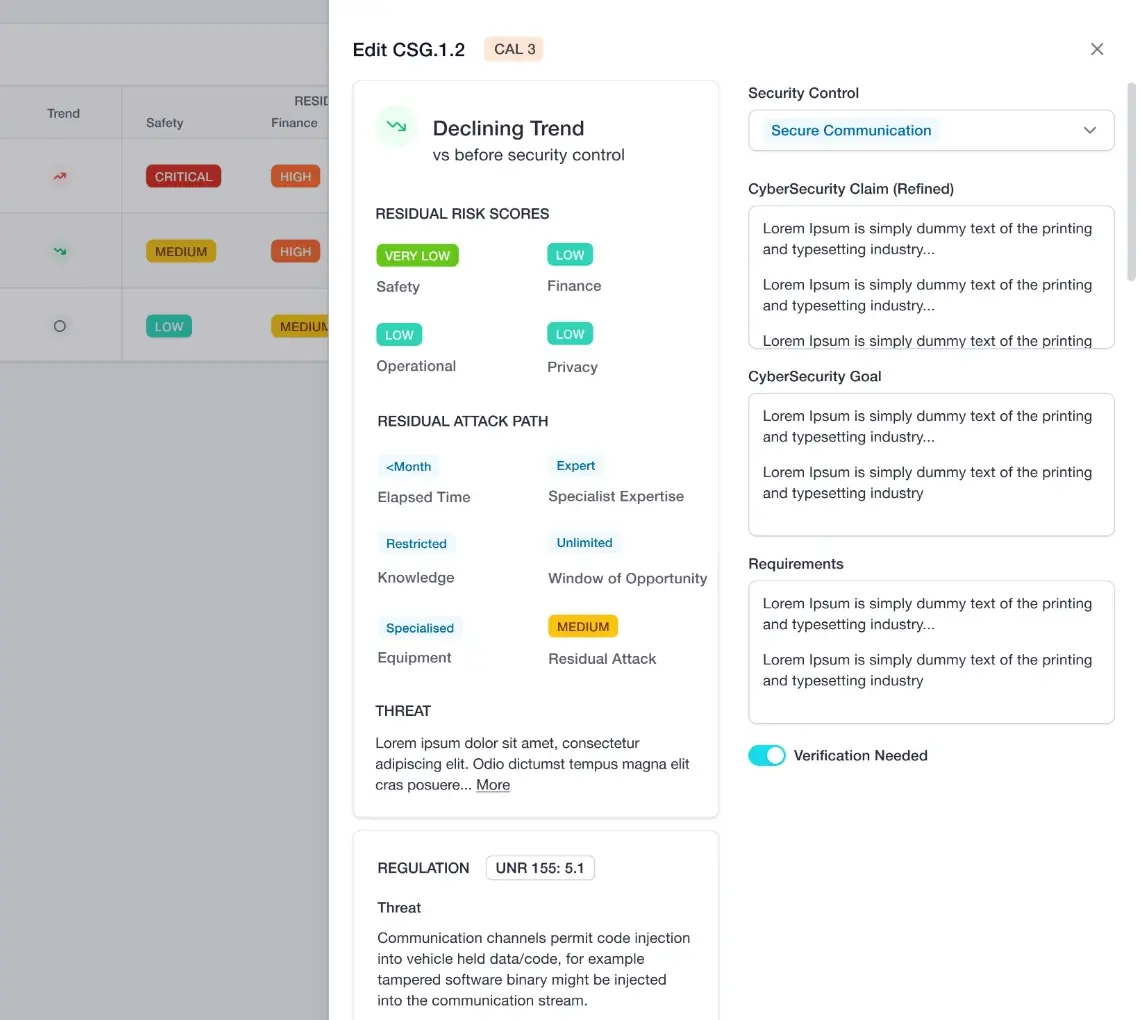
The cybersecurity concept
The final output of the TARA, with a details panel and an editing mode.
Challenge
Security and safety teams worked across scattered spreadsheets, cloud tools and manual workflows, and system diagrams were drawn by hand or in drawing apps.
Decision
A system that generates the data flow diagram and a pre-filled TARA report in one editable, guided flow aligned with ISO/SAE 21434, ending in an exportable Cybersecurity Concept Report.
Impact
- A full-day quality sprint with R&D, QA and Cyber teams surfaced 50+ usability and stability issues, and releases moved from monthly to bi-weekly.
- Once the product was more complete and stable, key design partners signed: SureSoft, Tier IV and Aurora.
- Today the platform is used by dozens of active users across multiple organizations.